
Diabetic Foot Care in Peacehaven
How Can Diabetes Affect Your Feet?
Dedicated clinical monitoring to safeguard mobility and prevent diabetic foot complications.
If it is poorly controlled, diabetes can damage nerves and blood vessels. Nerve damage is called neuropathy. The Diabetes UK leaflet 'Diabetic neuropathy' covers this subject in detail and is available from our online shop. There are three types of neuropathy, and they can all affect your feet:
Sensory Neuropathy
This affects the nerves that carry messages from the skin, bones and muscles to the brain and affects how we feel temperature, pain and other sensations. It is the most common form of neuropathy, mainly occurring in nerves in the feet and legs, and can lead to a loss of feeling and a failure to sense pain. This could mean that you might develop a blister or minor burn without realising it, which, if not treated properly, could become infected or develop into an ulcer.
Motor Neuropathy
This affects the nerves responsible for sending messages to the muscles about movements, such as walking. If the nerves supplying your feet are affected it could cause your feet to alter shape. Your toes may become clawed (curled) as your arch/instep becomes more pronounced or the arch may ‘fall’ causing flat feet. This can cause the bones in your foot to fracture (break) when stressed.
Autonomic Neuropathy
This affects the nerves which control activities which our bodies carry out all the time, which we have no control over. Damage to these nerves may affect your sweat glands, reducing secretions and making your skin dry and inelastic. If not looked after the skin may crack and become sore and prone to infection.
Diabetes and Your Blood Circulation
Diabetes may also affect the circulation by causing the arteries to become 'furred up' (artherosclerosis). This can affect all the major blood vessels, especially those supplying the feet. Without a good blood supply, you will have problems with cuts and sores, which do not heal very well, and as a result of poor circulation, you may also suffer from cramp and pain in your legs and/or feet. If your diabetes is poorly controlled, you run greater risk of poor circulation and the problems associated with a poor blood supply to your feet. High blood pressure; a high fat content in your diet and, in particular, smoking, all increase the risk of poor circulation.
Steps you can take to prevent problems happening include:
- Give up smoking
- Keep your blood glucose, blood pressure and cholesterol levels as near normal as possible
- Eat a healthy diet which is low in fat, sugar and salt, and high in fruit and vegetables
- Make sure that your feet are not exposed to extremes of heat or cold
- Take regular physical activity, for example a brisk walk each day
- Make sure that your socks and shoes are comfortable and fit well
- Check your feet daily, including in between your toes
- Attend your annual foot review (for those over 12 years old)
- Know your risk of developing foot problems
- Acorn Chiropody & Podiatry Limited Registration Number: 6495483
Many people only see a podiatrist (chiropodist)* on a referral, so make sure you keep any appointments you are given.
How Do I Look After My Feet?
It is a good idea to check your feet every day, looking for signs of calluses (areas of thickened hard skin), changes in colour and breaks in the skin. You might want to use a mirror to see the soles of your feet. If this is difficult, or if your eyesight is not as good as it was, try to get someone else to check your feet for you. Fortunately, you do not usually need to do anything very different from other people – general advice on footcare applies to you.
General Hygiene
Wash your feet each day, use soap and warm water – check the temperature of the water before you put your feet in. Dry your feet carefully, especially between the toes. There is no advantage in soaking your feet: this just makes the skin soggy and increases the risk of damage.
Skin Care
To keep your skin healthy, use an emollient cream and discuss with your healthcare team which one is best for you. Do not apply any cream between your toes as this will make the area too moist and can make an infection such as athletes foot more likely. If you use talc between your toes, be careful not to use too much as often it becomes clogged and can allow an infection to develop. You may find a pumice stone helpful for areas of hard skin, but it must be used with care. Never use a blade. If the hard skin is excessive, seek professional advice. Never use corn removal plasters: they contain acid which can cause the skin to break down.
Nail Care
Cut your nails regularly. Don't cut them down the sides or too short. Remember, your nails are there to protect your toes. It is safest to trim your nails with a pair of nail clippers and to use an emery board to file the corners of your nails. If it is difficult for you to care for your nails, you should seek help from a podiatrist. You may have to pay for this service. Cutting a ‘v’ shape in the nail to stop it in growing is an old fashioned idea which is incorrect. If you feel your nail is rubbing on your shoe, it may not be the nail which is too long but the shoe which is too short.
Some people try to clean the edges and sides of their nails using the sharp point of nail scissors. This is very dangerous. If you feel that your nails need clearing of dirt and debris, simply use a nailbrush or an old toothbrush and brush from the base of the nail forward. If it is difficult for you to care for your nails, you should seek help from a podiatrist.
Recommended Footwear & Shoe Guidelines
The right shoes and stockings/tights/socks will help to keep your feet healthy. This is why your choice of footwear is so important. It is not normally necessary to buy special or expensive shoes. As long as you follow the guidelines below, you should be able to buy the right footwear in a high street store and at a reasonable price.
Shoes that do not fit well, even those that feel comfortable, can cause corns, calluses, ingrowing toe-nails, blisters and ulcers. If you have neuropathy or poor circulation, wearing unsuitable shoes is likely to make even simple foot problems worse. Finding shoes that fit is not just a matter of buying a pair that feel comfortable or snug. Ideally, to ensure that the shoes you buy are suitable for you, you would have your feet measured for size and width by a trained shoe fitter each time you buy new shoes, but this is seldom available now. So take extra care.
Buy shoes which:
- Are broad fitting
- Have a deep and rounded toe area
- Are flat or low heeled
- Are fastened by a lace or buckle to keep the heel in the back of the shoe
If you are unsure of the fit or style that is most suitable for you, do ask a registered podiatrist for advice. Always examine the inside of your shoes for sharp objects or stones before putting them on and replace ruffled innersole linings. Avoid socks, stockings or tights with wrinkles or prominent seams. Garters and stockings or socks with elastic tops should also be avoided because they may restrict the circulation. Never wear socks with darned areas or holes.
Recognising Crucial Danger Signs
Swollen areas, changes in the colour of your skin or a slow-healing wound could indicate poor circulation, an infection, the early stages of an ulcer, or gangrene. Foot ulcers can be treated successfully, especially in the early stages. If they are left untreated, the risks of infection are high. The earlier the treatment, the more successful the outcome is likely to be, so seek immediate advice.
Pain in the feet and legs should never be ignored. Your body is telling you that there is a problem. Even painless sores can be very serious and should not be ignored. Sores and cuts that do not heal are important danger signs. Seek immediate advice. Your diabetes may not be well controlled, you may have an infection or your circulation may have worsened. All of these can be successfully treated if discovered early.
Check your feet every day: if you notice any of the danger signs you should make an appointment with your GP, podiatrist or nurse immediately. Do not try to treat injuries, corns or other foot problems yourself. Seek professional help. And never use corn removal plasters: they contain acid which can cause the skin to break down.
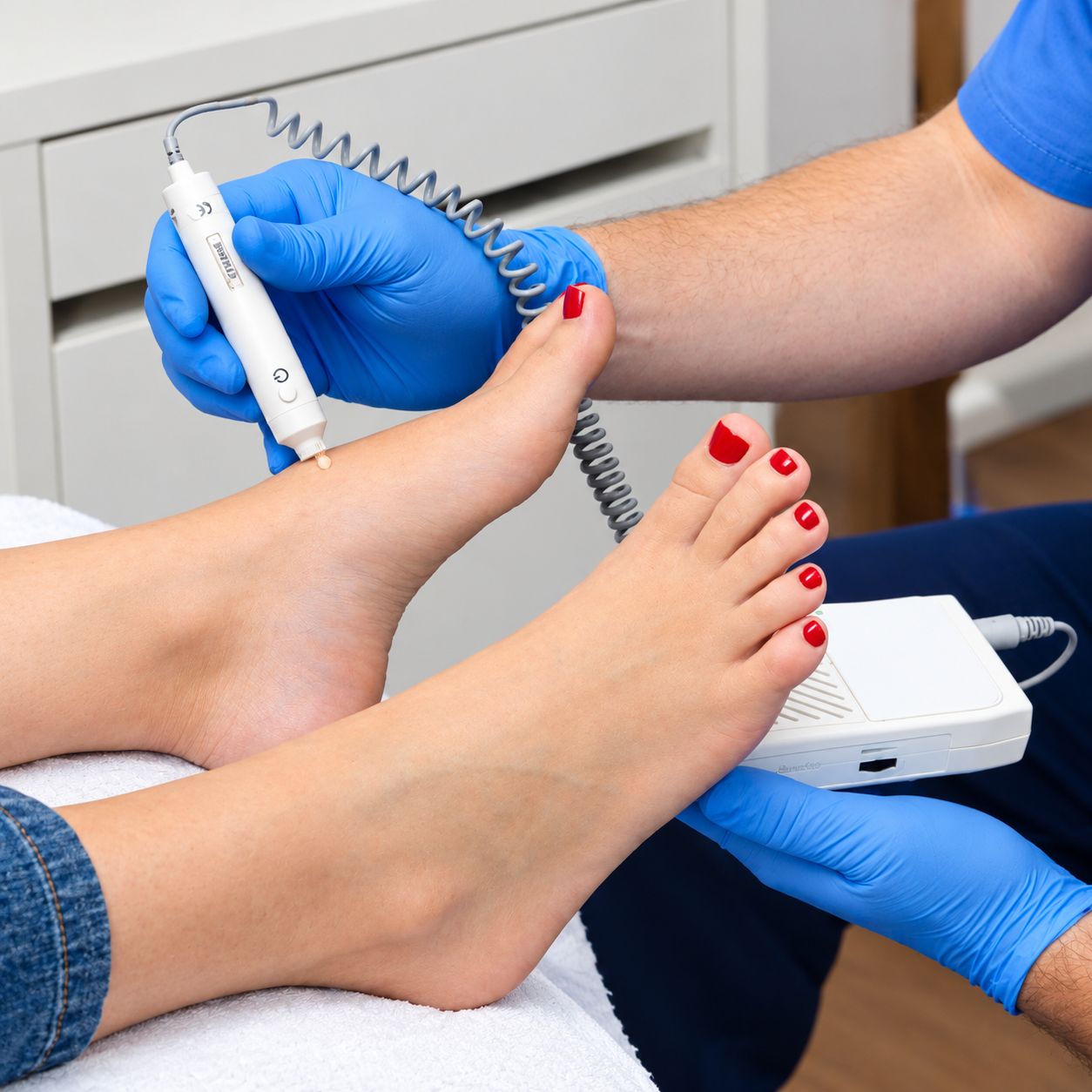
You should have your feet examined regularly at your GP surgery or by a Chiropodist/Podiatrist. In this examination you will be assessed for pressure points that may cause problematic corns or callus and problems with your nails. Also, the health of the circulation and sensation (blood flow and any nerve damage) can be checked using specialist equipment and the results can be recorded. This then allows the foot to be monitored and compared regularly.