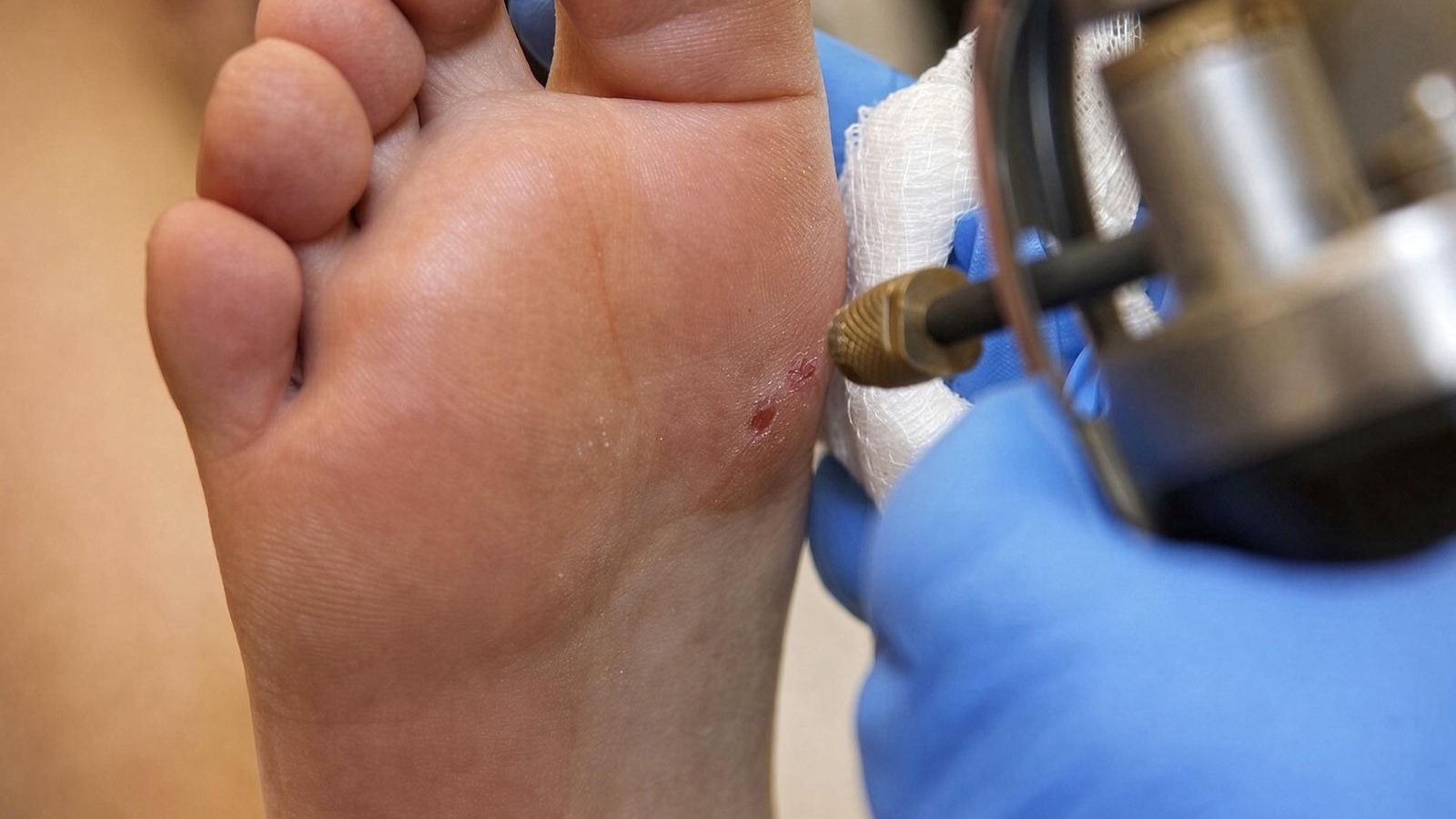
Is a verruca painful or slow to clear? We offer liquid nitrogen, silver nitrate and verruca needling, and your podiatrist will check which option is suitable for you.
A verruca is simply a wart that is found on the foot. They will vary in size, often depending on how long they have been there or the adequacy of the individual’s immune system. They do not often hurt unless they are on a weight-bearing area such as the heel or the ball of the foot.
It is caused by the human papilloma virus (HPV). This virus is very contagious but can only be caught through direct contact. It thrives in warm moist environments such as changing room floors or a poolside where somebody with a verruca infection has made contact.
Due to their contagious nature, you should take precautions in order to stop spreading them to others. If going swimming you should wear a verruca sock or use a barrier spray such as Excilor, these can also be used to protect you from contracting verrucae. After using the shower an anti-microbial spray should be used to clean the tray and bath mats/bathroom floors are also areas to consider.
Clinical Cryotherapy & Removal
Verruca Treatment
Do not self-treat if you have diabetes or poor circulation. However, if you are fit and healthy you can treat the verruca yourself with products available from the pharmacy such as salycilic acid ointments including Bazuka and Occlusal. If you take this course of action be sure to follow the product instructions and cease if you encounter any adverse effects such as pain or redness of the surrounding area. If you damage the healthy tissue surrounding the verruca you could hamper further treatment.
What can a Podiatrist do?
There is no one particular treatment that will have guaranteed results. The effectiveness varies greatly from person to person. At Acorn Podiatry we tend to use a combination of Silver Nitrate and Liquid Nitrogen Cryotherapy.
Silver Nitrate
This is an acid that is applied in order to kill the viral lesion. Following application, a dressing will be applied and should be left until the following day. Once removed the verruca will have a black coating. You can bath and swim etc as you usually would, the site does not need to be dressed or kept dry, however the coating should remain on as long as it st securely attached. Once it comes off, if the verruca remains you can either continue to treat with a home remedy or have a follow up treatment with your podiatrist. If you wish to neutralise the acid due to pain or irritation, simply place your foot in salt water.
Cryotherapy
This is one of the more effective treatments, which involves freezing the lesion. The extent will be dependent upon factors such as circulation and any medical conditions. The sub-zero temperature of the liquid nitrogen kills the virus thus eradicating the verruca. In some cases, a blister may appear in which case the site should be kept clean with a dressing. A pad may also be provided by your podiatrist to reduce pressure in this instance.
With all treatment types, multiple visits may be required before the verruca goes. It is difficult to predict the amount of sessions required due to the variation of effectiveness between individuals. If you have any issues or concerns following your treatment, please consult your podiatrist or GP.
Book a Verruca Assessment in Peacehaven
If you have a painful, persistent or recurring verruca, Acorn Chiropody & Podiatry can assess your foot and discuss appropriate treatment options. Contact our team to arrange an appointment.