
Verruca Needling
Podiatry Treatment and Aftercare Advice
What is verruca needling?
A verruca is a wart on the foot caused by the human papillomavirus (HPV). Verrucae can be painful, particularly when located on a weight-bearing area of the foot.
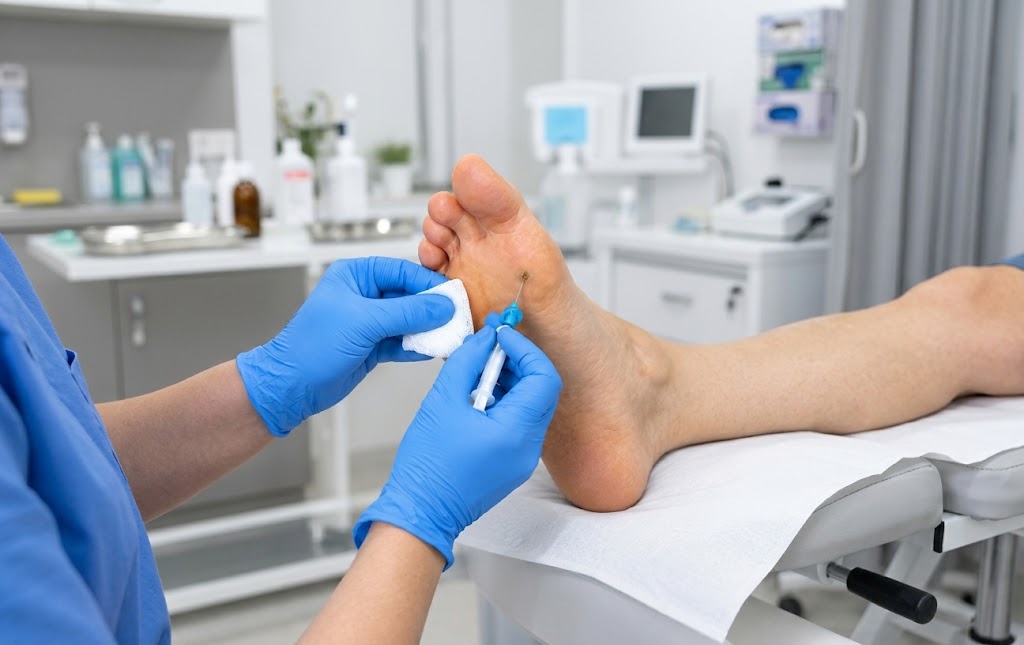
Verruca needling is a minor surgical procedure carried out by a podiatrist under local anaesthetic. A sterile needle is used to puncture the verruca repeatedly, with the aim of stimulating your body's immune system to recognise and respond to the virus.
The procedure is intended to encourage your body to clear the verruca. Success cannot be guaranteed, and some verrucae may persist or require further treatment.
What happens during the procedure?
Phase 01
1. Assessment & Discussion
Your podiatrist will assess your foot, explain the procedure and discuss the potential benefits and risks with you.
Phase 02
2. Cleaning & Local Anaesthetic
The skin around the verruca will be cleaned, and a local anaesthetic will be injected to numb the area.
Phase 03
3. The Needling Procedure
Once the area is numb, your podiatrist will use a sterile needle to perform the needling procedure.
Phase 04
4. Protective Dressing
A dressing will be applied to protect the treated area. You should not feel sharp pain during the procedure, although you may notice pressure or movement. Please tell your podiatrist if you experience pain or discomfort.
What can I expect afterwards?
Once the local anaesthetic wears off, you may experience:
- Soreness, tenderness or throbbing around the treated area.
- Mild swelling or bruising.
- A small amount of bleeding or blood staining on the dressing.
- Discomfort when walking or putting weight on the foot.
These effects are usually temporary and should gradually improve over the following days. The treated area may remain tender for longer, depending on the size and location of the verruca.
Rest your foot when possible and avoid prolonged walking, running, sports or other activities that put excessive pressure on the treated area until it is comfortable.
Dressing and Wound Care
Please follow the specific instructions given by your podiatrist, as these may vary depending on the size and location of the treated area.
- Keep the dressing clean, dry and in place for the period advised by your podiatrist, usually the first 24–48 hours.
- If the dressing becomes wet, dirty or loose, replace it with a clean, dry dressing as instructed.
- If there is minor bleeding, apply firm, continuous pressure over the dressing with a clean dressing or gauze for 10–15 minutes without repeatedly lifting it to check.
- Once you have been advised to remove the initial dressing, gently clean the area with clean water and pat it dry. Apply a fresh sterile dressing if the wound is still open or draining.
- Avoid soaking the foot in baths, swimming pools or hot tubs until the wound has closed.
- Do not pick at the treated area, remove scabs or apply verruca paints, acids or other treatments unless your podiatrist advises you to do so.
- Wear comfortable footwear that does not rub or place excessive pressure on the treated area.
If bleeding does not stop after sustained firm pressure, seek urgent medical advice.
Pain Relief
If required, you may take your usual over-the-counter pain relief, such as paracetamol, provided it is suitable for you. Always follow the packet instructions and check with a pharmacist if you are unsure.
If you have been advised to avoid particular medicines, or have a medical condition that affects your choice of pain relief, follow the advice of your healthcare professional.
When should I seek medical advice?
Contact your podiatrist or an appropriate healthcare professional if you notice:
- Increasing pain rather than gradual improvement.
- Redness, warmth or swelling that is spreading.
- Pus, an unpleasant smell or increasing discharge from the wound.
- A fever or feeling generally unwell.
- Bleeding that will not stop with firm, continuous pressure.
Seek urgent medical assessment if you develop rapidly spreading redness, severe or rapidly worsening pain, or feel seriously unwell.
If you have diabetes, poor circulation, reduced sensation in your feet or a condition affecting your immune system, seek advice promptly about any concerns with wound healing.
How long will it take to heal?
The treated area will usually begin to settle over the first few days, although healing time varies. The skin may take several days to a few weeks to heal fully, depending on the extent of treatment and the location of the verruca.
The aim of needling is to stimulate an immune response, which can take several weeks or months. The verruca may gradually reduce in size or disappear, but this is not immediate and recurrence is possible.
Your podiatrist will advise whether a follow-up appointment is required to assess healing and the response to treatment.
Important Information
Verruca needling is generally well tolerated, but potential risks include pain, bleeding, bruising, infection, delayed wound healing, scarring, persistent verruca and recurrence. Local anaesthetic also carries a small risk of an adverse reaction.
Please contact your podiatrist if you have any concerns about your recovery or are unsure how to care for the treated area.